Introduction
Creating content on Instagram in 2026 has very little to do with what worked just two or three years ago. Formats have evolved, the algorithm has changed, and user expectations are very different. According to the Instagram Trend Talk 2025 report, more than 62 percent of users say they intentionally ignore content that feels too promotional or repetitive (source: https://about.instagram.com/blog). In this context, posting more is no longer enough. What really makes the difference today is the ability to create content that is useful, recognizable, and consistent over time. This article explains what truly works on Instagram in 2026, beyond oversimplified advice, and how to build an effective content strategy without chasing trends.
Why old Instagram tactics no longer work
For a long time, growth on Instagram relied on predictable mechanics. Posting frequently, using the right hashtags, and following trends was often enough to gain reach. In 2026, these tactics have lost much of their impact.
Meta confirmed in 2024 that Instagram’s algorithm now prioritizes retention and meaningful interactions rather than simple posting volume (source: https://about.meta.com). This means content that is viewed quickly and ignored is gradually shown less.
Copied, generic, or overly formatted content is detected very fast. It does not only reduce reach, it also damages brand or creator perception.
What the Instagram algorithm truly values in 2026
Contrary to popular belief, the algorithm is not the enemy. Its goal is to keep users engaged on the platform. To do that, it favors content that generates real attention and time spent.
According to a 2025 Hootsuite study, posts that generate saves have twice the impact on reach compared to likes (source: https://www.hootsuite.com/resources). Long comments and private shares are also very strong signals.
The most important signals today
- Average time spent on the post
- Save rate
- Meaningful comments, not only emojis
- Shares in private messages
Understanding the difference between visible content and effective content
Visible content is not necessarily effective content. Many posts generate views but very little real impact. In 2026, the goal is no longer just to appear in the feed, but to leave a mark.
Effective content usually does at least one of these things: it helps, clarifies, makes people think, or reassures. Formats that answer a specific question or solve a concrete problem perform best over time.
Instagram now favors accounts that build long-term relationships rather than short visibility spikes.
The central role of editorial positioning
One of the most common mistakes is trying to speak to everyone. In 2026, growing accounts are those with a clear and intentional editorial positioning.
Editorial positioning comes down to three simple elements: who you talk to, what you talk about, and why you are legitimate. Without this foundation, content becomes inconsistent, even if it is well produced.
According to an analysis by Later published in 2025, niche-focused accounts achieve on average 34 percent higher engagement than generalist accounts (source: https://later.com/blog).
Why consistency matters more than frequency
Posting every day is not required. Posting inconsistently, however, is a major growth blocker. Instagram analyzes account consistency over weeks, not just a few posts.
Internal data shared by Instagram Creators shows that accounts posting two to four times per week in a consistent rhythm perform better than those posting intensively but without structure (source: https://creators.instagram.com).
Consistency also helps create implicit appointments with the audience, which strengthens brand recall.
The formats that truly perform and why
Not all formats serve the same purpose. Reels drive discovery, carousels support understanding, and stories maintain the relationship.
A well-structured carousel with a clear progression can generate saves for weeks. Reels are more volatile but help reach new audiences quickly.
According to Metricool, in 2025, educational carousels generated on average 1.6 times more engagement than single-image posts (source: https://metricool.com/blog).
Why message matters more than format
A format never saves a weak message. Many posts fail because they start with the format instead of the idea.
Before posting, the real question is simple: what should the viewer understand, remember, or do after seeing this content? The format comes after.
This approach helps avoid creative fatigue and shallow content, even when following trends.
Comparison: opportunistic strategy vs structured content strategy
This comparison is based on feedback from European social media agencies between 2024 and 2025.
| Criteria | Opportunistic approach | Structured strategy |
|---|---|---|
| Long-term vision | Weak | Clear |
| Real engagement | Variable | More stable |
| Audience loyalty | Limited | Strong |
| Trend dependency | High | Reduced |
| Business impact | Hard to measure | Clearer |
What no one tells you about Instagram content creation
Most popular advice focuses on immediate visibility. Very few talk about creative fatigue, audience saturation, or the challenge of staying consistent over time.
In 2026, successful accounts are rarely the ones that post the most. They are the ones that slow down to produce better content, with real intention behind every post.
This mindset is what builds credible and effective long-term presence on Instagram.
Common mistakes that actually hurt performance
Many creators blame the algorithm when results stall, but the issue often comes from repeated editorial choices. One of the most common mistakes is trying to please everyone. This dilutes the message and makes the account hard to understand.
Another frequent mistake is over-optimization. Trying too hard to “hack” the algorithm often leads to artificial, inauthentic content that is quickly forgotten.
Ignoring audience feedback is also a major blocker. Comments, direct messages, and reactions provide valuable signals to adjust content. Accounts that grow in 2026 are those that listen.
Creating content that converts without constantly selling
Instagram is not a direct sales platform. Users come to learn, be entertained, or get inspired. Overly commercial content usually generates low engagement and trust loss.
Content that converts well is often indirect. It demonstrates expertise, addresses a real problem, or offers a new perspective. Conversion happens later, once trust is established.
According to a 2025 Sprout Social study, 64 percent of users say they follow a brand because it shares useful content before promoting its products or services (source: https://sproutsocial.com/insights).
The importance of smart repetition
Repeating does not mean boring. In 2026, most followers only see a fraction of published content. Repeating key messages from different angles reinforces memory without creating fatigue.
A single topic can become an educational carousel, an explanatory Reel, and then a more personal story. This is not repetition, it is contextual adaptation.
Instagram values this thematic consistency because it clarifies the account’s value proposition.
How to measure what truly works
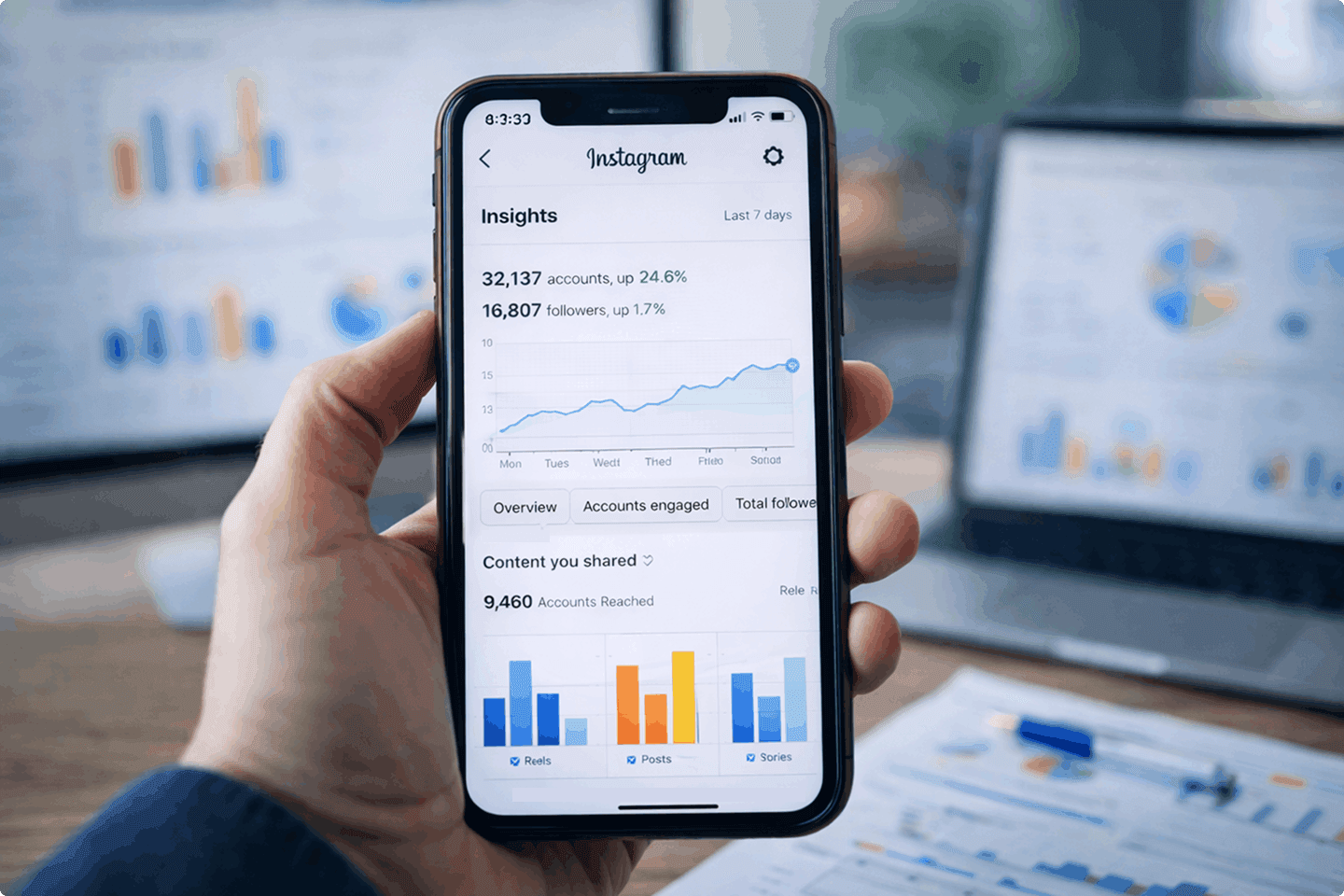
Visible metrics like likes or views are no longer enough. In 2026, the most useful indicators are more subtle. They reflect relationship quality, not just reach.
Instagram provides data such as average time spent, saves, and messages generated after a post. These metrics better reflect real content impact.
A post with few likes but many saves can be far more effective than a highly visible post with shallow engagement.
Building a sustainable Instagram strategy
An effective strategy relies on three simple pillars: clarity, consistency, and continuity. Without these, even good content struggles to deliver long-term results.
Clarity defines the message and positioning. Consistency shapes the editorial line over time. Continuity ensures regular publishing without burnout.
Creators and brands that succeed in 2026 are those who simplified their strategy instead of overcomplicating it.
Comparison: trendy content vs long-term content
This comparison is based on observations made by social media agencies between 2024 and 2025.
| Criteria | Trend-based content | Long-term content |
|---|---|---|
| Lifespan | Short | Long |
| Production effort | High | Controlled |
| Long-term engagement | Low | More stable |
| Brand image | Variable | Consistent |
| Perceived value | Instant | Progressive |
FAQ: questions creators really ask
Do I need to post every day on Instagram in 2026?
No. Consistency matters more than frequency. Two to four posts per week are enough if they are coherent.
Are Reels mandatory to perform well?
No. They help discovery, but carousels and stories remain essential for long-term engagement.
Are hashtags still useful?
Their impact is limited. They mainly help contextualize content rather than drive massive reach.
Should I follow every trend?
No. Trends should be filtered and adapted to the account’s positioning.
How can I avoid creative burnout?
By reducing posting pressure and working with recurring themes instead of isolated ideas.
Conclusion
Creating effective content on Instagram in 2026 requires fewer magic tricks and more clarity. The accounts that succeed are not the ones that post the most, but the ones that understand why they post. By focusing on message clarity, content quality, and audience relationship, Instagram becomes a powerful and sustainable lever again. What no one really tells you is that performance rarely comes from the algorithm, but almost always from the intention behind each post.
