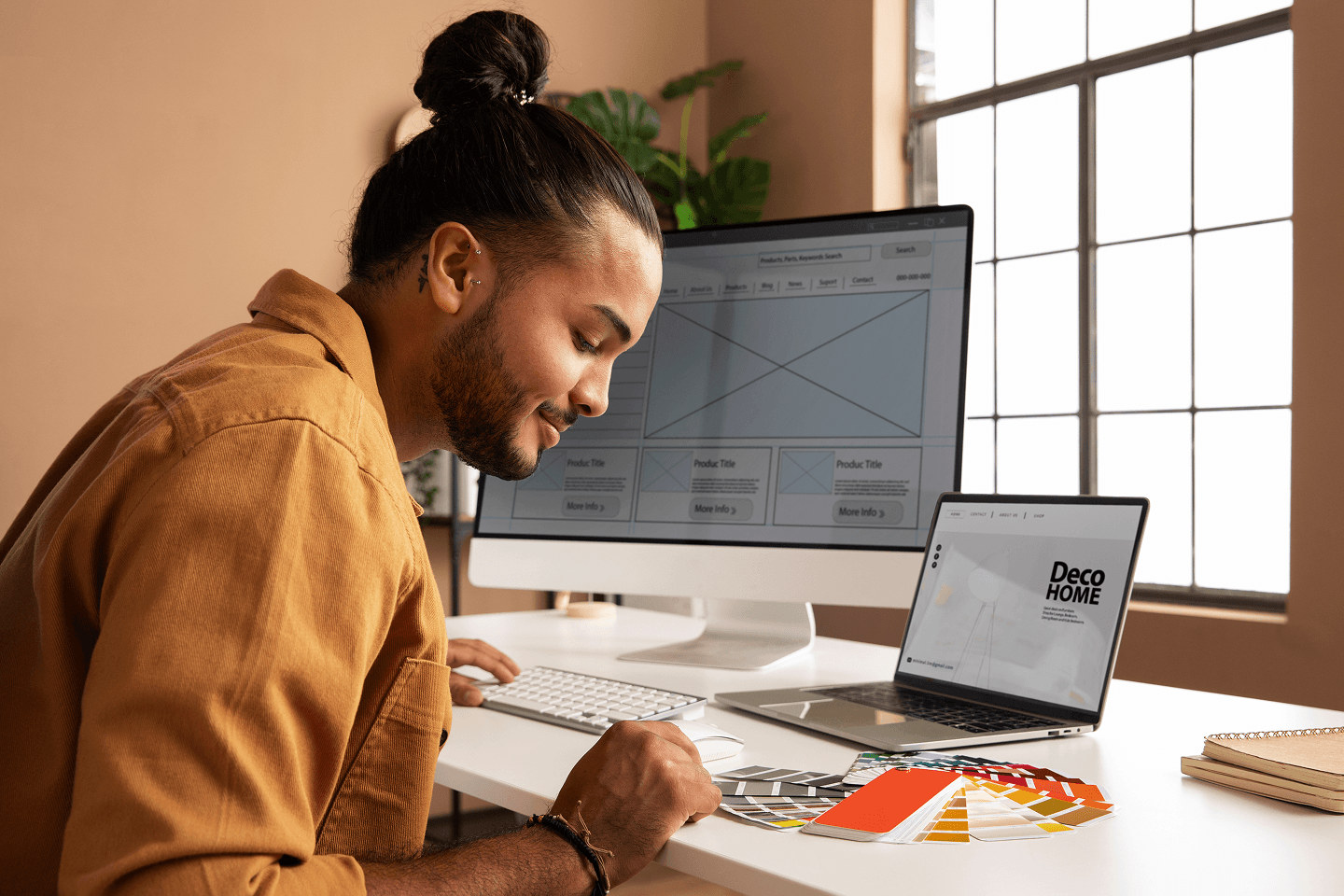
Modern Webdesign: Boost Visibility and Growth
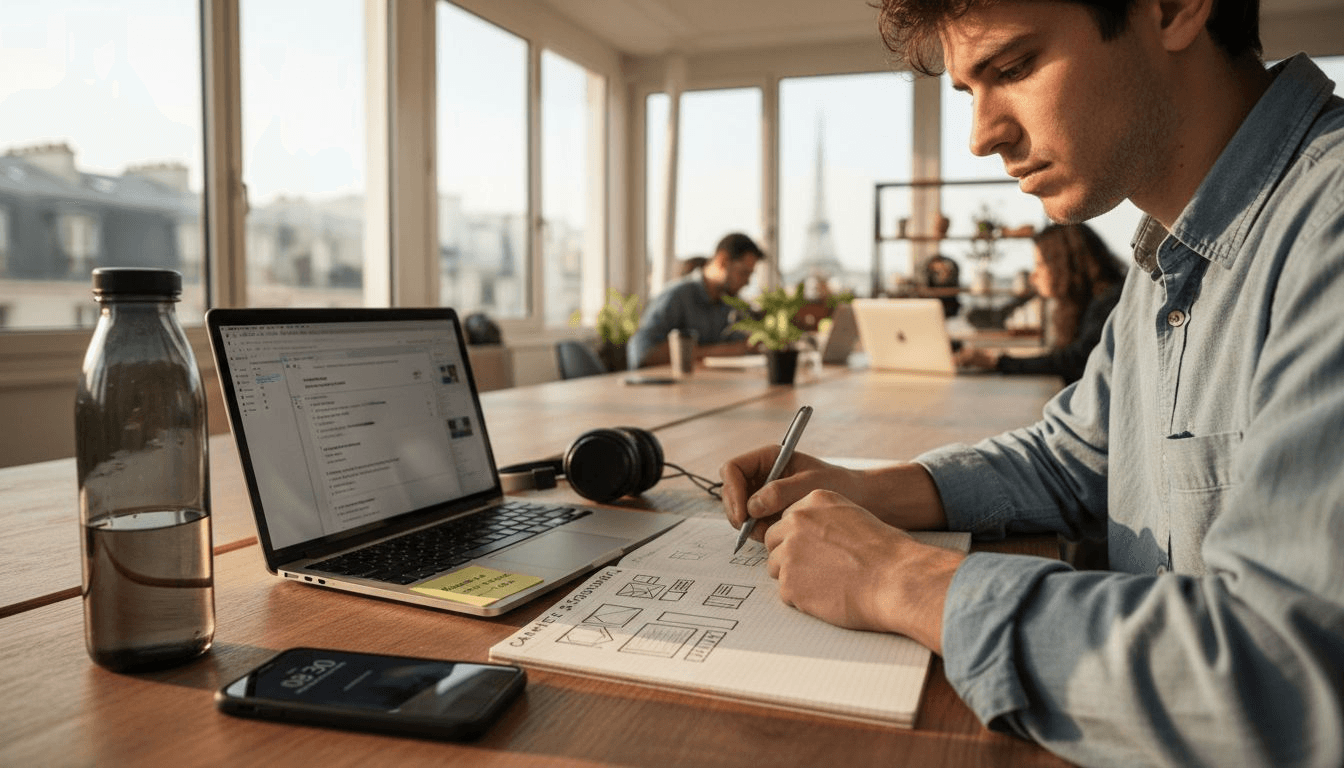
Redesigning a website can quickly become a real challenge when every detail counts to capture customers' attention. Today, the success of an SME or startup in France requires a webdesign combining aesthetics, adaptability, and performance. A well-thought design is not only pleasant to look at: it increases credibility and facilitates intuitive navigation. Discover how modern webdesign allows you to create an interactive communication platform and boosts your brand's visibility.
Key Takeaways
| Point | Details |
|---|---|
| Strategic Approach | Modern webdesign merges aesthetics, functionality, and performance to create effective digital experiences. |
| Emerging Trends | Contemporary designs favor minimalism, micro-interactions, and personalization to enhance engagement. |
| Impact on Credibility | Professional design increases user trust and improves websites' natural referencing. |
| Pitfalls to Avoid | SMEs must avoid underinvestment and neglecting user experience to succeed in their digital transformation. |
Defining Modern Webdesign and Its Stakes
Modern webdesign goes beyond merely creating visually appealing interfaces. It is a strategic approach that combines aesthetics, functionality, and performance to meet the complex demands of contemporary users.
This discipline combines several key elements, with the primary goal of creating intuitive and effective digital experiences. The current challenges of webdesign focus on several essential dimensions:
- Adaptability: Compatibility with all types of screens and devices
- Performance: Loading speed and smooth navigation
- Accessibility: Inclusive design for all users
- User experience: Intuitive and ergonomic journey
- Visual identity: Faithful representation of the brand
Modern webdesign implies a holistic approach where every visual and functional element is strategically designed. It is no longer just about creating a website, but designing a true interactive communication platform.
Fundamental principles now rely on a deep understanding of user behaviors, emerging technologies, and communication objectives specific to each company. Good design is no longer measured only by its appearance but by its ability to generate engagement and convert visitors into customers.
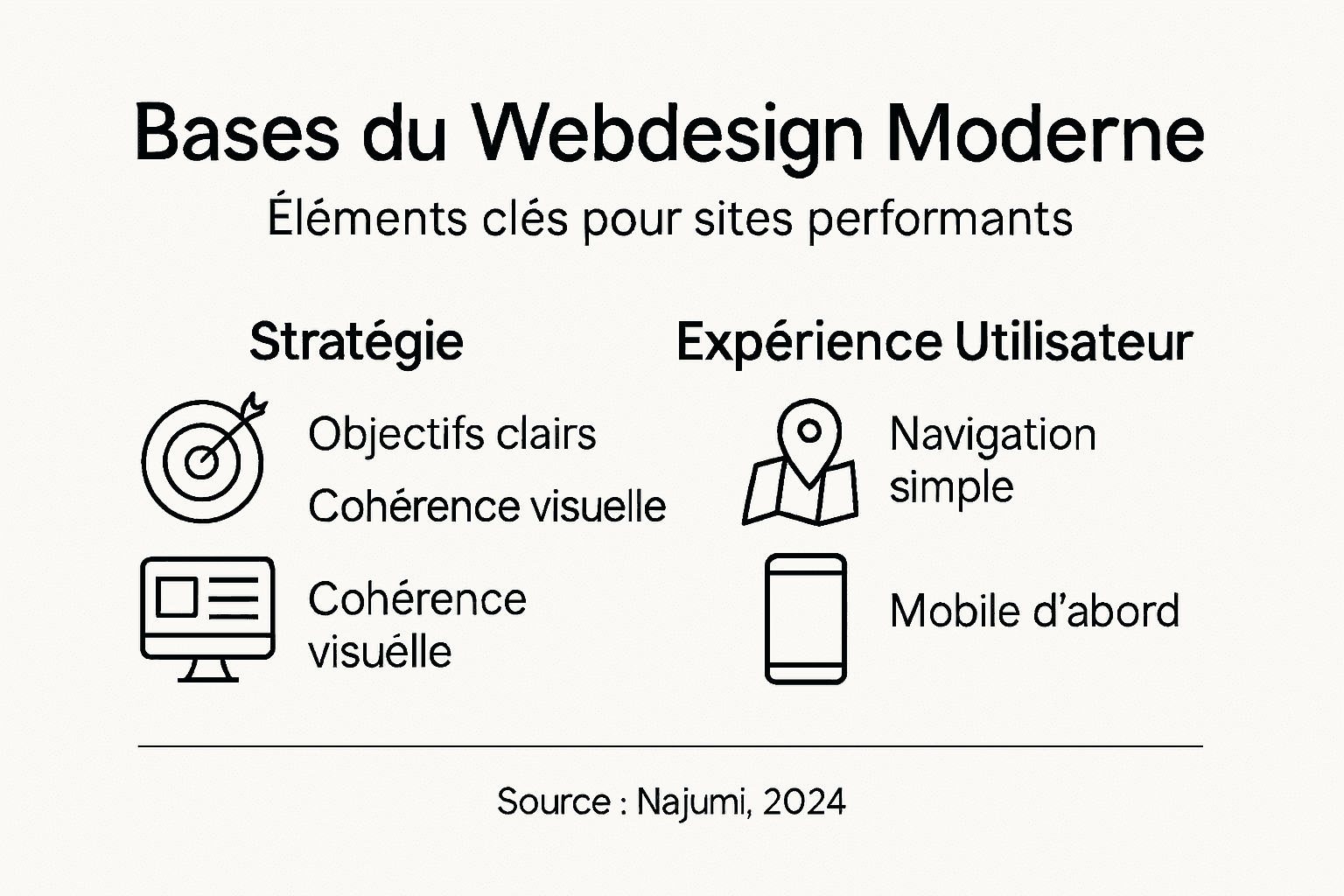
Pro tip: Invest in a webdesign that tells your brand's story while precisely meeting your users' needs.
Exploring Current Trends and Variations
Contemporary webdesign evolves rapidly, with trends radically transforming how we design and interact with digital interfaces. This constant dynamic pushes creators to continually rethink their approaches and innovate.
Among the most significant emerging trends are:
- Clean minimalism: Simple, clear designs focused on the essentials
- Dynamic micro-interactions: Subtle animations enhancing user engagement
- Dark mode and personalized modes: Visual customization options
- Neumorphic design: Interfaces mimicking natural and organic shapes
- Integrated augmented reality: Immersive and interactive web experiences
Responsive web design is no longer limited to technical adaptation but becomes a truly user-centered design approach. Interfaces must now anticipate needs, offer intuitive journeys, and instantly adapt to different use contexts.
These evolutions reflect a profound transformation: webdesign is no longer just an aesthetic exercise but a strategic discipline aiming to create memorable user experiences. Contemporary designers now combine technical, psychological, and creative skills to produce interfaces that tell stories, evoke emotions, and naturally facilitate interaction.
Pro tip: Invest in continuous training and stay constantly informed of new technological trends to keep your webdesign expertise up to date.
Analyzing the Impact on Visibility and Credibility
Webdesign today is much more than just visual dressing: it is a true strategic communication tool that directly influences users' perception and trust towards a brand.
The dimensions of digital credibility rest on several essential criteria:
- Aesthetic design: Reflecting professionalism and attention to detail
- Intuitive navigation: Facilitating understanding and interaction
- Graphic consistency: Reinforcing brand identity
- Loading speed: Demonstrating performance and efficiency
- Multi-screen adaptability: Proving technological modernity
Professional web conception literally transforms visitors' perception. It instantly communicates the level of professionalism, reliability, and expertise of a company even before the content is read.
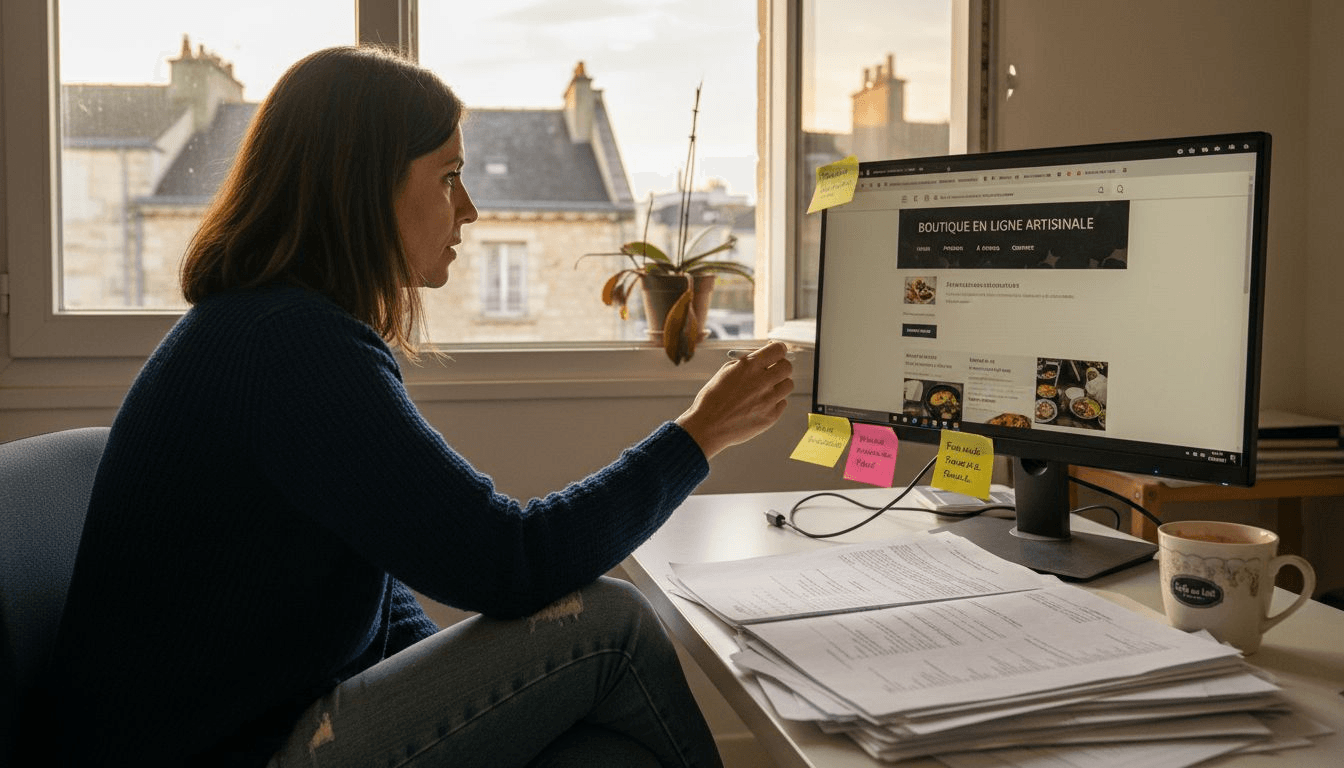
Search algorithms now incorporate these qualitative parameters, making design a direct lever of visibility. A well-designed site not only improves user experience but also increases natural referencing, creating a virtuous circle of credibility and performance.
Pro tip: Invest in regular design analysis, seeking user feedback to continuously identify improvement areas.
Understanding the Link with User Experience
User experience today represents the nerve center of any modern digital strategy. It is no longer simply a technical question but a holistic approach integrating design, psychology, and technology.
The essential components of UX (User Experience) unfold across several crucial dimensions:
- Accessibility: Inclusive design adapted to all user profiles
- Intuitiveness: Smooth and natural navigation
- Responsiveness: Quick response time on all devices
- Personalization: Experience tailored to individual needs
- Emotional: Ability to evoke positive reactions
An optimal user experience transforms a simple website visit into a truly engaging journey. It transcends purely functional aspects to create an emotional and memorable connection with the user.
Effective digital interfaces no longer merely transmit information; they now tell stories, anticipate needs, and dynamically adapt to user behaviors. It's a subtle art combining technology, design, and empathy to create truly transformative experiences.
Pro tip: Regularly perform user tests and navigation journeys to continuously identify improvement points for your interface.
Identifying Pitfalls to Avoid for SMEs
French SMEs often face significant challenges when designing their website, with strategic errors that can compromise their visibility and digital credibility. A deep understanding of these pitfalls becomes crucial to succeed in their digital transformation.
Key pitfalls to absolutely avoid are:
- Underbudgeting: Neglecting the budget dedicated to web design
- Generic design: Lack of visual differentiation
- Mobile not prioritized: Ignoring mobile experience
- Excessive content: Overloading pages with information
- Neglected SEO: Lack of natural referencing strategy
Fatal errors in web projects often stem from insufficient planning and a too narrow vision of the website. A website is not just a showcase but a true strategic communication and lead generation tool.
Every design decision must be carefully thought out, user-centered, and aligned with the company's specific business objectives. The key lies in a holistic approach combining aesthetics, technical functionality, and communication strategy.
Below is a summary of the main pitfalls SMEs must avoid when creating or redesigning their website:
| Common Pitfall | Major Consequence | Recommended Solution |
|---|---|---|
| Generic design | Low competitive differentiation | Invest in unique branding |
| Mobile not prioritized | Loss of smartphone traffic | Design mobile-first |
| Content overload | Dilution of the main message | Structure and prioritize info |
| Neglected SEO | Almost no visibility | Integrate SEO from the start |
Pro tip: Invest in an external digital audit to objectively identify your website’s weaknesses before any major redesign.
Comparing with Alternatives and Old Practices
The evolution of webdesign marks a radical transformation of digital communication approaches. Older practices, often rigid and unidirectional, have given way to dynamic, interactive, and user-centered strategies.
A comparison between old and new practices reveals significant differences:
- Static design vs Dynamic and responsive design
- Generic content vs Contextual personalization
- Linear navigation vs Personalized user journeys
- Technical approach vs Experiential approach
- Unidirectional communication vs Multidirectional interaction
Websites are no longer mere digital showcases but true interactive dialogue platforms. This transformation involves not only technical changes but also a cultural revolution in how digital interaction is conceived.
To better understand the evolution of webdesign, here is a comparative table between the main advantages of modern webdesign and the limitations of traditional approaches:
| Key Aspect | Modern Webdesign | Traditional Practices |
|---|---|---|
| User engagement | Interactive and tailored journeys | Static and linear navigation |
| Web visibility | SEO optimization from the design | Often neglected SEO |
| Accessibility | Inclusivity for all audiences | Accessibility rarely considered |
| Brand image | Strong and differentiated identity | Generic or outdated presentation |
This shift pushes companies to rethink their strategies, favoring designs that tell stories, generate emotion, and create authentic connections with users. The goal is no longer just to inform but to create a memorable and engaging experience.
Pro tip: Conduct a regular comparative audit between your current site and emerging standards to identify areas for improvement.
Transform Your Modern Webdesign into a Growth Engine with Najumi
Modern webdesign is much more than mere aesthetics. It addresses the crucial challenge of balancing performance, accessibility, and user experience to boost your online visibility and credibility. If you want to avoid strategic pitfalls like generic design or navigation not adapted to mobiles, Najumi supports you with tailor-made expertise perfectly aligned with the challenges identified in this article.
Make the choice of a performant digital solution designed to tell the unique story of your brand while improving your natural referencing and truly engaging your visitors. Discover how Najumi, a digital agency in Lyon, can boost your project through showcase sites, e-commerce, or mobile applications tailored to you. Don't leave your online presence to chance any longer, contact Najumi now for a successful digital transformation. Also benefit from valuable advice on the impact of professional webdesign and current webdesign trends to always stay aligned with your users' expectations.
Frequently Asked Questions
What is modern webdesign?
Modern webdesign is a strategic approach that combines aesthetics, functionality, and performance, aiming to create intuitive and effective digital experiences.
What are the main challenges of contemporary webdesign?
The main challenges include adaptability, performance, accessibility, user experience, and visual identity, all essential to meet today's users' needs.
How does webdesign influence visibility on search engines?
A well-thought web design improves not only user experience but also contributes to search engine optimization, which can increase the website's visibility and traffic.
What are the current trends in webdesign?
Current trends include clean minimalism, dynamic micro-interactions, dark mode, neumorphic design, and the integration of augmented reality, which transform interactions with digital interfaces.